











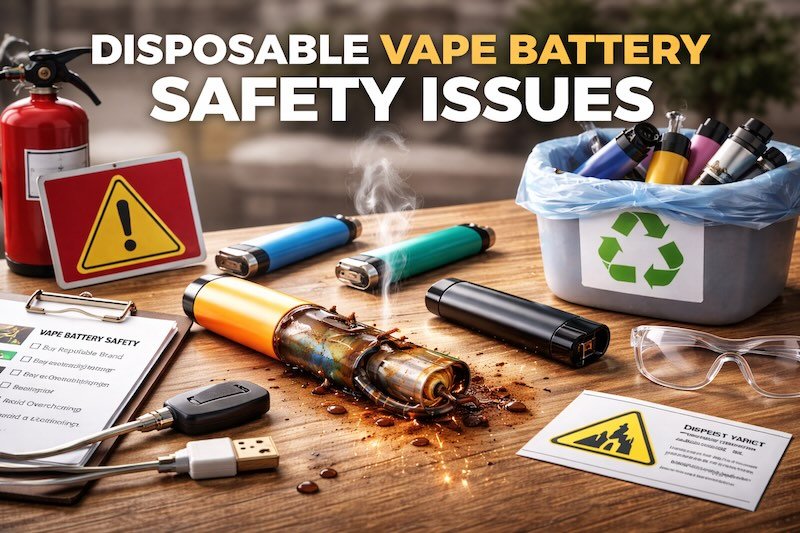
Disposable vape battery safety issues usually come down to a small lithium ion battery doing a lot of work in a very compact space. Fires, overheating, and in rare cases explosions, tend to happen when something goes wrong with heat management, charging behavior, or overall build quality. It sounds dramatic, but in most everyday situations, these risks are preventable. I think that is the part people often miss. Problems rarely appear out of nowhere. They usually build up slowly, quietly, and then show up all at once.
At a basic level, battery incidents are caused by overheating, physical damage, overcharging, water exposure, or the use of poorly manufactured devices. To avoid these risks, it helps to buy from reputable sources, charge devices carefully, avoid extreme temperatures, and dispose of damaged units as soon as something feels off. Even that vague feeling of “this doesn’t seem right” matters more than people think.
Disposable vapes are designed to be convenient. That convenience can sometimes lead to carelessness. Leaving one charging overnight, tossing it in a pocket with keys, or forgetting it on a dashboard on a hot day feels harmless in the moment. Usually nothing happens. Until it does.
Why Disposable Vape Batteries Are Different
Disposable vapes rely on small lithium ion batteries. These batteries are efficient and lightweight, but they are also sensitive. Unlike larger battery systems that have room for advanced cooling or layered protection, disposables work in tight tolerances. There is very little margin for error.
When everything is manufactured correctly and used as intended, the battery stays within a safe temperature range. When something interferes, like heat buildup, physical damage, or charging with the wrong power source, the internal chemistry can destabilize. This is where safety issues begin.
Some people assume that because disposables are smaller, they are automatically safer. That is not always true. Smaller batteries can overheat faster, especially if airflow is blocked or if the device is pushed beyond its intended use cycle.
Key Battery Safety Issues You Should Actually Care About
Overheating and Thermal Runaway
Thermal runaway is one of those technical terms that sounds abstract until you understand what it means. It is a chain reaction. Once the battery gets too hot, internal reactions create more heat, which creates more reactions. At a certain point, the battery cannot stop itself.
In disposable vapes, overheating can happen during use, charging, or even storage. Charging is the most common trigger, especially when devices are left plugged in unattended or charged overnight. Heat builds slowly, often unnoticed, until the battery vents hot gas or ruptures.
I have seen people dismiss warmth as normal. Sometimes it is. But persistent heat, especially near the battery area, is not something to ignore.
Physical Damage From Drops or Pressure
Disposable vapes are not fragile in the obvious sense, but internally they can be. Dropping a device on concrete, sitting on it, or crushing it in a tight bag can damage internal separators inside the battery.
The problem is that physical damage is not always visible. A device can look fine on the outside while the battery inside has been compromised. That internal damage can lead to short circuits later, sometimes days after the drop. It feels random, but it is not.
Low Quality or Counterfeit Devices
This is where brand choice really matters. Devices produced without proper quality control often lack essential safety features such as overcharge protection, stable wiring, or proper insulation.
Buying from a trusted retailer significantly reduces this risk. Quality control, compliance testing, and consistent manufacturing standards are not optional when lithium batteries are involved. They are critical.
Cheap devices may work fine for a while. Then suddenly they do not. And when batteries fail, they do not fail gently.
Water and Moisture Exposure
Water and lithium batteries do not mix well. Moisture can cause short circuits, corrosion, or chemical reactions inside the battery housing. Even humidity can become an issue over time, especially if devices are stored in bathrooms, cars, or damp environments.
Accidental splashes happen. What matters is what you do next. Continuing to use or charge a device after liquid exposure increases risk significantly.
Improper Charging Habits
Charging mistakes are still the most common cause of battery incidents. Using fast chargers not designed for the device, charging from unstable power sources, or leaving devices plugged in long after they are full can all stress the battery.
Disposable vapes are not meant to be treated like smartphones. They do not have the same advanced charging management systems. Simpler design means fewer safeguards.
How to Avoid Disposable Vape Battery Hazards
Buy From Reputable Sources
This sounds obvious, but it is the most effective safety step. Purchasing from a trusted online vape store helps ensure the device meets safety standards and has not been tampered with or poorly stored.
Reputable sellers also rotate inventory properly. Old batteries degrade even if unused. Fresh stock matters more than people realize.
Develop Safer Charging Habits
Never charge a disposable vape unattended. Avoid charging overnight. Place the device on a hard, non flammable surface. Use only the recommended charger.
If the device becomes hot while charging, unplug it. Do not rationalize it away. Heat is information.
Pay Attention to Temperature
Extreme temperatures stress batteries. Leaving a vape in a hot car or in direct sunlight is risky. Cold can also damage battery chemistry, making it unstable once it warms up again.
Room temperature storage is ideal. Not exciting, but effective.
Inspect Devices Regularly
Check for swelling, dents, leaking fluid, or unusual smells. Any of these signs mean the device should be disposed of immediately.
I think many incidents happen because people keep using a device even after something feels slightly wrong. Batteries rarely fix themselves.
Store Devices Thoughtfully
Keys, coins, and metal objects can create short circuits if they contact battery terminals. Even disposables benefit from basic storage care.
Avoid tossing them loosely into pockets or bags. A small habit change goes a long way.
Disposable Vape Battery Risk
| Risk Factor | Low Risk Behavior | High Risk Behavior |
|---|---|---|
| Charging | Short supervised charging sessions | Overnight or unattended charging |
| Storage | Room temperature, dry area | Hot cars or damp environments |
| Handling | Careful, protected handling | Drops, crushing, loose pockets |
| Product Source | Trusted retailers like JoyMini | Unverified or unknown sellers |
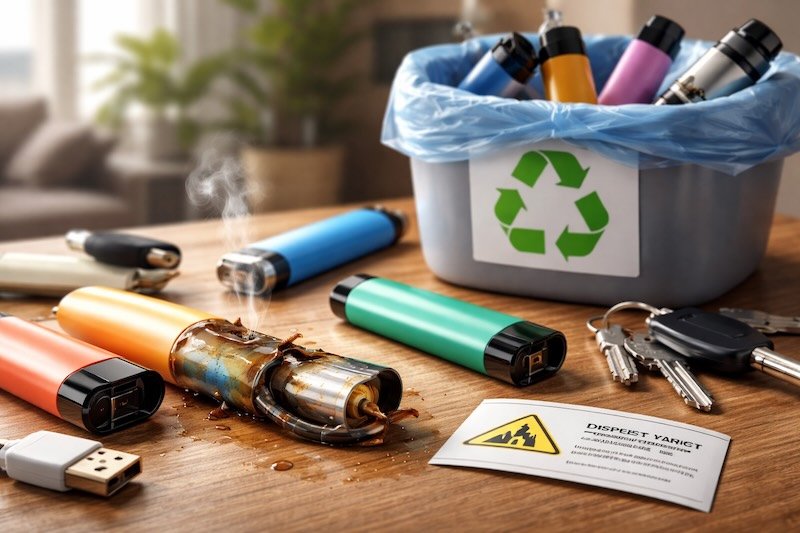
Safe Disposal Matters More Than People Think
Disposable vapes should never go in regular trash. Batteries can ignite during waste processing, causing fires in garbage trucks or landfills. This is not hypothetical. It happens.
Most areas have electronics recycling or hazardous waste programs that accept disposable vapes. If you are unsure, retailers often provide guidance on proper disposal.
Damaged devices should be isolated in a non flammable container until they can be safely recycled. It feels excessive until you remember what lithium batteries can do under pressure.
Common Disposable Vape Battery Myths That Create Real Risk
There are a few ideas about disposable vape batteries that keep circulating, and honestly, they cause more harm than reassurance. Some of them sound logical on the surface. Others are just repeated so often that they start to feel true. I think this is where safety conversations quietly fall apart.
“It’s Disposable, So It Can’t Be Dangerous”
This one comes up a lot. The word disposable makes people think low power, low risk, almost temporary. In reality, disposable vapes still use lithium ion batteries, the same chemistry found in phones, laptops, and power tools. The difference is scale, not behavior.
Smaller batteries can still overheat. They can still short circuit. And because disposables are often used casually, sometimes carelessly, the risk can actually increase. Less caution tends to mean more exposure to heat, pressure, or improper charging.
“If It Still Works, It’s Fine”
This belief probably causes more incidents than anything else. A device can function normally while the battery inside is already compromised. Internal damage does not always show up as performance loss right away.
A vape that heats up faster than usual, smells slightly metallic, or feels oddly warm when idle is communicating something. Continuing to use it because it still produces vapor is like driving a car because the engine has not seized yet. It misses the point.
“Charging From Any USB Is Safe”
Not all USB power sources are equal. Fast chargers, car chargers, or high output wall adapters can deliver inconsistent current. Disposable vapes are designed for modest, controlled charging. Pushing them harder stresses internal components.
Using the recommended charging method matters. If the device was never designed for rapid charging, forcing it into that scenario adds unnecessary risk.
The Environmental and Safety Overlap People Ignore
Battery safety and environmental responsibility are closely linked, even if they are rarely discussed together. Improper disposal is not just a pollution issue. It is a fire hazard.
When disposable vapes end up in household trash, they are compacted, crushed, and exposed to friction during transport. That mechanical stress can trigger battery failure long after the device has been discarded. Fires in waste facilities are often traced back to lithium batteries thrown away improperly.
Recycling programs exist for a reason. Using them protects workers, infrastructure, and the environment at the same time.
How Battery Safety Connects to Product Quality
Battery safety does not start at charging habits. It starts at manufacturing. Quality devices use stable battery cells, proper insulation, and built in safeguards that limit charging and discharge behavior.
Poorly made devices often skip these steps. That is why buying from a trusted source is not just about authenticity, it is about engineering discipline.
JoyMini focuses on offering products that meet safety expectations rather than chasing the cheapest possible components. That difference rarely shows up in marketing photos. It shows up months later, when the device behaves predictably instead of dangerously.
Practical Safety Checklist for Everyday Use
Sometimes long explanations help. Sometimes a simple checklist sticks better. This one is worth revisiting occasionally.
Daily Use Safety
If the device feels unusually warm, stop using it.
Do not vape while charging.
Avoid using the device if it has been dropped hard.
Keep it dry, even light moisture matters.
Charging Safety
Charge on a flat, non flammable surface.
Stay nearby while charging.
Unplug once fully charged.
Avoid charging overnight.
Storage Safety
Store at room temperature.
Keep away from metal objects.
Do not leave in cars, especially in summer.
Disposal Safety
Never throw in household trash.
Use electronics recycling programs.
Isolate damaged devices before disposal.
None of this is complicated. It just requires consistency.
Battery Safety vs Convenience, Finding the Balance
Disposable vapes are popular because they remove friction. No refilling, no maintenance, no complicated setup. That convenience is not the enemy. Ignoring basic safety habits is.
I think the goal is not to turn vaping into a cautious ritual. It is to respect the fact that even simple devices carry energy. When that energy is managed well, the device does what it is supposed to do. When it is ignored, problems follow.
Most safety advice does not demand effort. It asks for awareness. A quick glance, a pause before charging, a decision to stop using something that feels off. These moments are small, but they add up.
Advanced Disposable Vape Battery Safety, What Usually Gets Left Out
Once the basics are covered, charging habits, storage, avoiding damage, there is a deeper layer of battery safety that rarely makes it into blog posts. Not because it is secret or overly technical, but because it requires slowing down a little. And honestly, most content online rushes to the finish line.
Disposable vape batteries are designed with multiple assumptions about user behavior. They assume moderate usage. They assume controlled charging. They assume the device will not be pushed beyond its intended lifespan. When one or more of those assumptions break, the safety margin shrinks.
Usage Patterns Matter More Than People Think
Chain vaping, especially in warm environments, causes heat to build internally. Each puff raises the temperature slightly. Normally, that heat dissipates between uses. But when there is no pause, the battery and coil stay warm longer than intended.
This does not mean moderate heavy use is automatically dangerous. It just means the margin for error becomes thinner. If the device is already warm and then plugged in to charge, that overlap of stressors increases risk.
A small pause, even a few minutes, helps stabilize internal temperature. It sounds trivial, but battery chemistry is sensitive to these small windows.
Battery Aging Is Real, Even in Disposables
Lithium batteries age from the moment they are manufactured. Even unused devices degrade slowly over time. Reputable retailers manage inventory carefully so products are not sitting in warehouses for extended periods.
This is another reason why buying from a trusted source like https://joymini.ca/ matters. Proper stock rotation ensures batteries are closer to their optimal performance window when they reach users.
Older batteries are more prone to instability, especially when exposed to heat or improper charging. The device might still work. That does not mean the battery is as safe as it once was.
Regulatory Standards and Why They Matter Quietly
Battery safety regulations are not flashy. They do not appear on packaging in bold fonts. But they shape everything behind the scenes.
Devices sold through reputable channels typically comply with electrical safety standards, battery transport regulations, and manufacturing quality benchmarks. These standards influence insulation thickness, charging limits, and material selection.
Unregulated devices often skip these steps. They may look identical on the outside. Inside, the difference can be significant.
JoyMini’s approach focuses on compliance and product consistency rather than chasing trends. That consistency reduces variability, and variability is often where failures occur.
Battery Safety Responsible Use vs Risky Use
| Scenario | Lower Risk Approach | Higher Risk Approach |
|---|---|---|
| After Heavy Use | Let device cool before charging | Charge immediately while warm |
| Travel Storage | Protective case or compartment | Loose in bag with metal items |
| End of Life | Recycle at electronics facility | Dispose in household trash |
FAQ
Can disposable vapes explode?
Explosions are rare, but overheating or battery failure can occur under certain conditions such as physical damage, overcharging, or exposure to extreme heat. Following proper usage and charging guidelines significantly reduces risk.
Is it safe to charge a disposable vape overnight?
No. Disposable vapes should not be charged overnight or unattended. Prolonged charging can overheat the battery and increase the risk of failure.
What should I do if my disposable vape gets wet?
Stop using it immediately. Do not attempt to charge or dry it with heat. Dispose of the device safely through an electronics recycling program.
How do I know if a disposable vape battery is damaged?
Warning signs include swelling, leaking fluid, unusual smells, excessive heat, or changes in performance. If any of these appear, stop using the device.
Where can I safely buy disposable vapes?
Purchasing from trusted retailers reduces the risk of counterfeit or low quality devices and ensures proper storage and handling standards.
Final Thoughts on Disposable Vape Battery Safety
Battery safety is not about fear. It is about awareness. Disposable vapes are designed to be simple, but simplicity does not mean invulnerability. Most incidents are not caused by dramatic misuse. They come from small habits repeated over time.
Charging a little too long. Ignoring a bit of heat. Tossing a device into a bag without thinking. None of these actions feel risky on their own. Together, they create the conditions where batteries fail.
The good news is that avoiding these issues does not require technical knowledge. It requires attention. Choosing reputable products. Respecting basic charging rules. Disposing of devices responsibly.
That balance between convenience and caution is where safe use lives. And once it becomes routine, it barely feels like effort at all.